
Flower Mound Wood Flooring installs, refinishes and maintains commercial wood flooring in Flower Mound, TX, with more than 20 years of wood floor experience behind the work. A commercial floor is not a residential floor with more square footage. It is a different specification, a different schedule and a different maintenance expectation, and treating it otherwise is how a beautiful new floor looks tired within a year.
The two things that change everything are traffic and downtime. A house sees a family walk the same lines a few times a day; an office suite, a showroom or a dining room sees hundreds of people, chairs dragged across the same spot, carts, heels and cleaning equipment. Meanwhile the business cannot close, so the work has to fit into evenings, weekends or phased areas without ever leaving the space unusable at opening.
We scope commercial work around both realities. That means specifying finish systems for the traffic the space actually takes rather than for how it photographs, planning the phasing and the cure windows with your operating hours in hand, and putting the whole sequence into a written scope so nobody discovers a closure they had not budgeted for.
Where Wood Floors Work in Commercial Space
Offices and Professional Suites
Wood reads warmer and quieter than hard surface alternatives, which is why it keeps appearing in reception areas, conference rooms and executive suites. The wear pattern in an office is concentrated and predictable: entry paths, the area around reception, and the tracks that chair casters cut in front of every desk. Those areas drive the specification and the maintenance plan more than the total floor area does.
Retail and Showroom Floors
Retail asks the floor to look excellent under bright display lighting while taking constant traffic and periodic fixture changes. That combination favors a textured surface and a matte or low-satin sheen, since a bright finish under retail lighting shows every scuff and every drag mark from a moved fixture. Planning for future fixture layouts avoids visible patches where a display once stood.
Restaurants, Bars and Hospitality
Front of house is a legitimate place for a wood floor and back of house generally is not. Dining rooms and bar areas take heavy point loads, chair movement and spills, so they need a durable finish system, a texture that hides wear, and a recoat schedule that is planned rather than reactive. Kitchens, dish areas and anywhere with standing water are not wood flooring locations.
Specifying for Commercial Traffic
Finish Systems and Recoat Cycles
The finish, not the wood, is what takes the traffic. Commercial-grade waterborne polyurethane systems build harder films and return a space to service faster than oil-modified products, which matters when the closure window is a weekend. The critical decision is not which product but whether a recoat cycle is planned, because recoating before the finish is worn through avoids ever needing a full sand.
Species, Grade and Texture Under Heavy Use
Harder species resist denting from point loads better, and Janka hardness rating is a reasonable way to compare them. Texture does at least as much work: a wire-brushed surface disperses scuffs and scratches across the grain instead of showing them as clean lines, and a character grade with natural variation hides marks that a uniform select grade would display plainly.
Sheen, Slip and Cleaning Regimes
Sheen level affects both appearance and how a floor is perceived underfoot, and matte and satin are the practical commercial choices. Just as important is agreeing how the floor will be cleaned, because the wrong cleaning product or a wet mopping routine will degrade a finish faster than the traffic will. We leave written maintenance guidance with the handover rather than assuming it is known.
Working in an Occupied Building
After-Hours and Phased Scheduling
Most of this work happens outside business hours or in defined phases, with the space handed back usable at every opening. Phasing means designing clean boundaries where sanding and finishing can stop, which is a layout decision made before the job starts. We agree the phase map and the hours in the scope so the schedule is a commitment rather than an intention.
Dust Containment and Odor Control
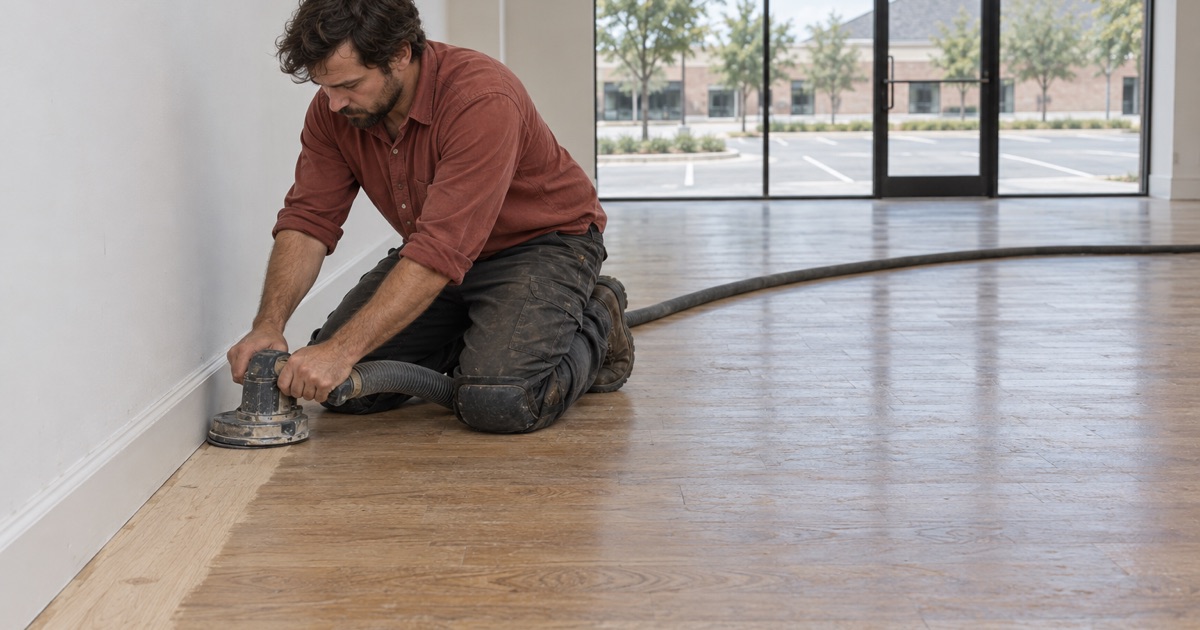
Our sanding equipment runs on a dust containment system and the work area is sealed off with barriers, with supply and return vents covered so the building’s ductwork does not distribute fines into adjacent tenancies. Finish odor is managed by product selection and ventilation planning, which matters more in a shared building than in a house, since the tenant next door did not order a new floor.
Tenant, Landlord and Property Manager Coordination
Commercial jobs usually have more than one party with an interest in them. We put the scope, the phasing, the closure windows and the maintenance expectations in writing so the tenant, the landlord and the property manager are working from the same document. Where building rules govern working hours, elevator access or waste removal, those get built into the plan rather than discovered on the first night.
Refinishing and Maintaining a Commercial Floor
Screen and Recoat on a Schedule
The single most cost-effective thing a commercial property can do with a wood floor is recoat it on a cycle. A screen and recoat abrades the existing finish and lays a fresh coat over it, restoring the surface without touching the wood, and it can often be phased overnight. Once traffic lanes wear through to bare wood, that option is gone and the only route left is a full sand.
Spot Repair and Board Replacement
Commercial floors take localized damage: a dropped fixture, a leak under an appliance, a section damaged during a fit-out. Individual boards are cut out and laced in with a weave-in repair, then blended into the surrounding finish. Catching those promptly keeps the repair local, since damage left in place spreads through the subfloor and turns a two-board job into a room.
Turnover Work and Documentation
Between tenants a floor has to reach a defined standard quickly and the work has to be documented. We assess honestly whether a space needs a recoat or a full sand, price the two separately, and hand over dated photographs and an itemized scope. That record is what settles conversations about condition and what lets a property manager plan the next cycle with real numbers.
- 20+ Years on Wood Floors
- Dustless Sanding and Containment
- Written Scope Before Work Starts